
Maybe you’ve caught yourself wondering if your use is actually a problem, or if you’re just reacting to someone else’s concern. That uncertainty is common. Not knowing for sure doesn’t mean you’re wrong, and it doesn’t mean you have a diagnosis. At TeleClarity, our marijuana addiction treatment in Washington State is built for these gray areas.
We don’t hand out labels before we’ve listened. Our clinicians start by hearing your story, then help you see what your own pattern of use means for your health, your relationships, and your daily life. Cannabis use disorder is a real, diagnosable condition. Reaching out for support is a sign of clarity, not weakness. Sometimes, getting an honest answer from someone trained to give one is worth more than another year of wondering.
Understanding Marijuana Dependence
Dependence on marijuana rarely arrives all at once. When you use marijuana regularly, your brain’s cannabinoid receptors gradually become less responsive. These are the same receptors that respond to THC, the psychoactive compound in cannabis responsible for the “high.” Your brain adjusts to expect regular THC exposure. Over time, it needs that exposure just to function the way it used to. This is why someone can start out using marijuana to relax or unwind, and later find they need it just to feel normal.
How quickly this happens varies. Daily or near-daily use, higher-potency products like concentrates and vapes, and starting at a younger age all speed up the process. Dependence is different from simply liking how marijuana makes you feel. Your body has made a physical adjustment, and reversing that adjustment takes time once use stops. Recognizing this distinction matters, because dependence often develops well before someone would describe their use as a problem.

Signs of Cannabis Use Disorder
Clinicians look for a pattern of behaviors when deciding if marijuana use has crossed into cannabis use disorder. No single sign means you have a diagnosis, but if several of these sound familiar, it’s worth taking seriously.
- Using more cannabis, or using it more often, than originally intended
- Spending a significant amount of time obtaining, using, or recovering from use
- Strong cravings or urges to use
- Continuing use despite it causing problems at work, school, or home
- Giving up activities you used to enjoy in favor of using
- Needing more cannabis over time to get the same effect
- Repeated attempts to cut back or quit that haven’t stuck
If this pattern sounds familiar, we can help you make sense of it. At TeleClarity, we evaluate cannabis use disorder every day, and a conversation with us doesn’t commit you to anything.
Physical and Psychological Effects of Marijuana Use
Regular marijuana use affects both body and mind, often in ways that are easy to miss in the day-to-day.
Physical Effects
Regular, heavy cannabis use can shift your appetite, sleep, memory, and coordination. Smoking adds risk for your lungs. Over time, tolerance builds, so it takes more to feel the same effects. Cannabis use among U.S. adults reached record highs in 2023. As it becomes more common, it’s easy to overlook the physical toll ongoing use can take.
Psychological Effects
Heavy or long-term marijuana use can make it harder to stay motivated, manage your mood, or focus on things that once felt easy. For some, using it becomes a way to manage anxiety or tough emotions, which can make cutting back feel harder than expected. Clinicians at TeleClarity use a clear set of criteria to diagnose cannabis use disorder, and the severity depends on how many are met in a year.
What Marijuana Withdrawal Can Feel Like
Withdrawal is one of the clearer signs that cannabis use has shifted from habit to physical dependence. It’s also one of the most misunderstood. Many people expect marijuana withdrawal to be mild or not show up at all, but it’s a real set of symptoms that can be recognized and supported.
Irritability, anxiety, trouble sleeping, low appetite, restlessness, and a flat mood are common after stopping or cutting back. These symptoms usually show up in the first few days and ease over a week or two, though sleep problems can last longer for some. How intense it feels depends on how much and how long you’ve been using. Having support during this time makes it easier to get through and gives you a place to talk about anything that feels confusing or unexpectedly hard.
Common Misconceptions About Marijuana Addiction
Marijuana is legal in Washington and often seen as a low-stakes way to unwind. That can make it easy to miss when use becomes a problem.
Myth: “It’s legal, so it can’t really be a problem.”
Legal status is a policy decision. Alcohol and tobacco are legal too, and both can lead to addiction. What matters is how cannabis use affects your life, not whether it’s legal.
Myth: “Marijuana addiction isn’t a real diagnosis.”
Cannabis Use Disorder is listed in the DSM-5. It’s measured against a defined set of clinical criteria, including craving, unsuccessful attempts to cut down, tolerance, and continued use in spite of social or interpersonal problems. If what you’re feeling matches this pattern, it has a name and an established path to treatment. It isn’t a personal failing.
Myth: “This isn’t something that actually happens to people around here.”
A recent study looked at how common Cannabis Use Disorder is among adults in primary care across Washington State, years after legalization. This is an active area of research here because it’s showing up in people who look a lot like your neighbors, coworkers, and friends, not just a distant or hypothetical group.
Myth: “I’d know if it were a real addiction. I’m still functioning fine.”
Cannabis Use Disorder exists on a spectrum from mild to severe. Many people with mild or moderate disorder keep working, maintain relationships, and meet daily responsibilities. Functioning on the surface doesn’t rule out a pattern worth talking about.
Myth: “I could stop anytime. I just don’t want to.”
This is something many people tell themselves, and it’s hard to know for sure without actually trying. If cutting back or stopping brings up irritability, sleep problems, or strong cravings, it’s worth noticing, not brushing aside.
When Marijuana Addiction Treatment May Be Beneficial
There’s no single line you have to cross before support makes sense, and waiting for one only costs you time. A few warning signs are worth paying attention to: use keeps increasing even after real consequences, like a warning at work, a strained relationship, or slipping grades. Withdrawal symptoms show up strong enough that using again just to feel normal starts to feel like the only option. Cannabis use gets tangled up with anxiety or depression, making it hard to tell if you’re using to cope or if the use itself is shaping how you feel. Responsibilities at work, school, or home start to slip in ways that are hard to explain away.
A clinical assessment at TeleClarity shows you where you stand. It compares your use to diagnostic criteria, checks for any co-occurring conditions, and identifies the level of support that fits.
From there, a structured plan replaces guesswork. Your clinician maps out your next steps and adjusts as you go, rather than leaving you to cut back on your own. If withdrawal is part of the picture, that support continues through it, with regular check-ins and a plan for what to do if symptoms get harder to manage.
How We Provide Marijuana Addiction Treatment in Washington State
Once you decide to move forward, care unfolds step by step: an initial assessment, a level of care matched to where you are, and therapeutic support that adjusts as your needs change.
Building a Treatment Plan Around Your Needs
A clinical assessment starts every treatment plan at TeleClarity. Your clinician walks through your history with cannabis, how long you’ve been using, how often, and what’s changed recently. They’ll also screen for co-occurring mental health concerns like anxiety, depression, or trauma, and talk through your daily life, including your schedule and how much time and privacy you have for sessions.
From there, we build a plan around your specific picture. If you need more daytime structure, we’ll recommend Virtual PHP. If a few sessions a week alongside your routine fits better, we might start with Virtual IOP. Either way, your clinician checks in regularly and adjusts your level of care as things change.
Our Therapy Services and Recovery Support
Individual therapy sessions give you focused, one-on-one time with a clinician to work through what’s specific to your situation. Group therapy connects you with other people navigating similar territory, which cuts through the isolation cannabis dependence can create. Relapse prevention planning runs through both, giving you concrete strategies for the occasions that are hardest to plan for alone.
At TeleClarity, our online marijuana addiction treatment draws on evidence-based methods, including cognitive behavioral therapy, motivational enhancement therapy, and contingency management, often used together depending on what your assessment points to.
Co-Occurring Mental Health Treatment
Cannabis use and conditions like anxiety, depression, and PTSD often show up together, without one necessarily causing the other. This overlap is sometimes called dual diagnosis or co-occurring disorder care. When that’s part of your picture, our clinicians at TeleClarity address both within one coordinated plan from the first assessment forward.
How Online Marijuana Addiction Treatment Fits Into Your Life
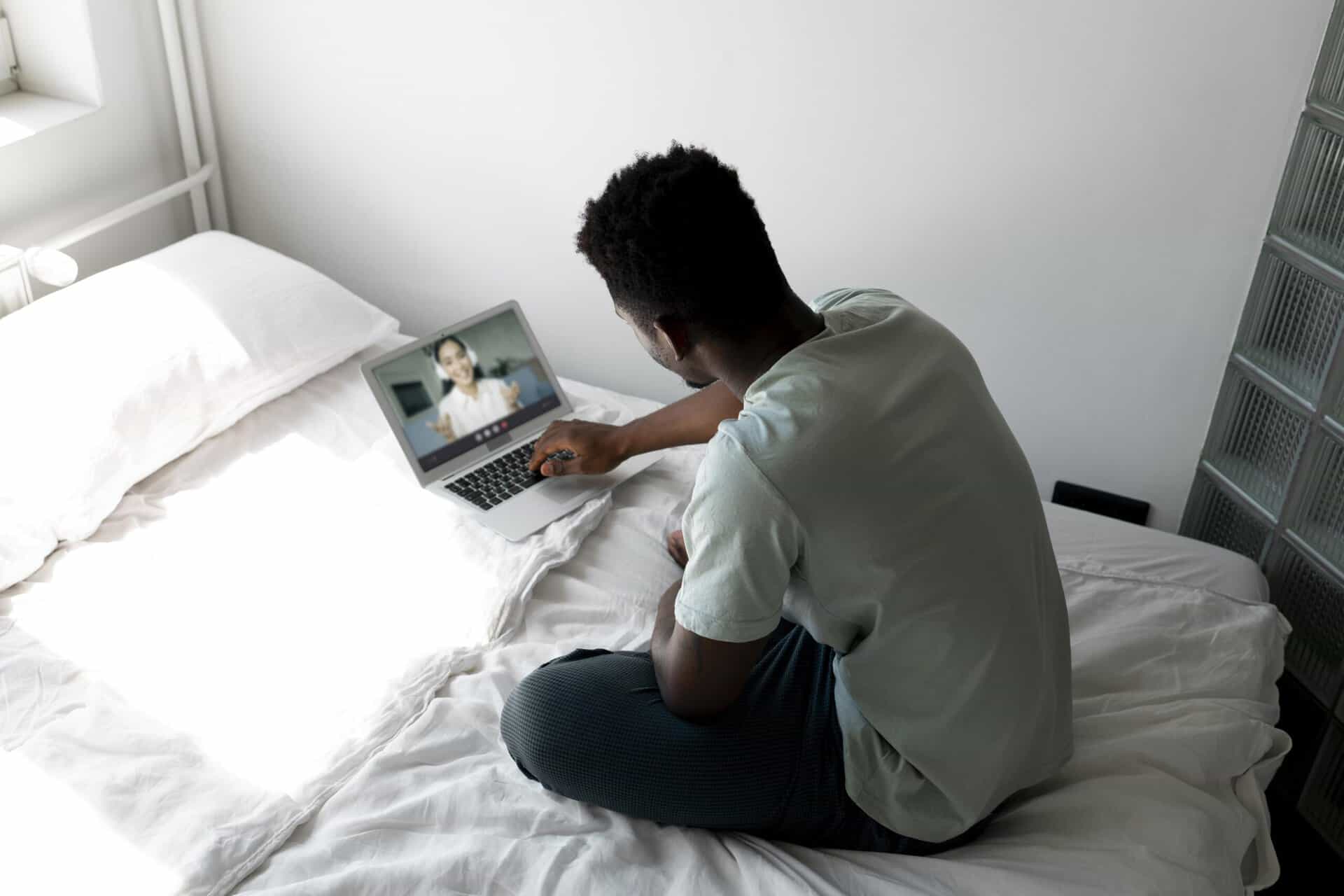
Driving to weekly appointments, arranging childcare, or explaining an absence to a manager can be the reason people put off getting support for months or years longer than they need to. Our telehealth addiction treatment approach removes that barrier without lowering the quality of care you receive.
At TeleClarity, we’re licensed in Washington State, and our clinicians work with clients from Seattle to Spokane to smaller communities in between, all through the same secure virtual platform. Sessions happen from wherever you are, on a schedule built around your work, school, or family commitments. Confidentiality is built into how care is delivered: there’s no waiting room, and no chance of running into someone you know.
Research on telehealth in substance use treatment, including a study funded by the National Institutes of Health’s HEAL Initiative, has found that telehealth can improve treatment retention compared to in-person care alone. Online marijuana addiction treatment at TeleClarity works best for people with a stable home environment, secure internet access, and a private space to take sessions.